MBBS, FWACS (General Surgery) · Nigeria · 8 Nov 2026
Thank you for the brilliant question.
Haemorrhoids (Piles)
What are haemorrhoids?
Haemorrhoids are abnormally enlarged and symptomatic vascular cushions composed of blood vessels, smooth muscle, and connective tissue located within the anal canal. They occur when these vascular cushions become swollen, inflamed, prolapsed, or thrombosed.
In simple terms, haemorrhoids are swollen veins in and around the anus and lower rectum.
Risk Factors
Risk factors include, but are not limited to:
Factors that increase straining
• Chronic constipation
• Chronic diarrhoea
• Low-fibre diet
• Prolonged sitting on the toilet
• Inadequate fluid intake
Factors that increase intra-abdominal or pelvic pressure
• Pregnancy
• Ascites
• Obesity
• Chronic cough
• Heavy lifting
Other factors
• Advancing age
• Family history
• Sedentary lifestyle
• Portal hypertension (rarely)
Types of Haemorrhoids
1. By Cause
Primary (Idiopathic)
• Most common
• Associated with degeneration of supporting tissues and increased venous pressure
Secondary
Occurs due to an underlying condition such as:
• Pregnancy
• Portal hypertension
• Pelvic tumours
• Conditions causing chronic straining
2. By Location
Internal Haemorrhoids
• Arise above the dentate line
• Covered by columnar mucosa
• Usually painless
• Commonly present with painless rectal bleeding and prolapse
External Haemorrhoids
• Arise below the dentate line
• Covered by anoderm
• Painful when thrombosed
• May present as perianal swelling
3. Mixed Haemorrhoids
• Contain both internal and external components
Goligher Classification of Internal Haemorrhoids (based on prolapse)
Grade I- bleeding without prolapse
Grade II- prolapse during defecation but reduces spontaneously
Grade III- prolapse that require manual reduction
Grade IV- permanently prolapsed and can't be reduced
Treatment
Management depends on:
1. Symptoms
2. Type of haemorrhoid
3. Degree of prolapse (grade)
4. Presence of complications
1. Non-Operative (Conservative)
Treatment
Usually first-line for Grades I and II.
Lifestyle and Dietary Measures
• High-fibre diet
• Adequate hydration
• Weight reduction
• Regular exercise
• Avoid prolonged toilet sitting
• Avoid straining
Medical Treatment
• Bulk-forming laxatives (e.g., psyllium husk)
• Stool softeners
• Topical anaesthetics
• Topical corticosteroids (short-term use)
• Analgesics where required
2. Office-Based / Minimally Invasive Procedures
Typically used for Grades II and III.
Rubber Band Ligation (RBL)
• Most common office procedure
• Band placed above the dentate line
• Causes ischaemic necrosis and fixation
Injection Sclerotherapy
• Sclerosant injected into submucosa
• Produces fibrosis and fixation
Infrared Coagulation
• Causes coagulation and scarring
• Effective for early haemorrhoids
Other Options
• Bipolar coagulation
• Radiofrequency ablation
3. Surgical Treatment
Usually reserved for Grades III and IV, recurrent disease, or failed office treatment.
Conventional Haemorrhoidectomy
Open (Milligan-Morgan)
• Gold standard
• Lowest recurrence rate
Closed (Ferguson)
• Wound closed primarily
• Often associated with quicker healing
Stapled Haemorrhoidopexy (Longo Procedure)
• Excises a ring of rectal mucosa
• Repositions prolapsed haemorrhoids
• Less postoperative pain
Doppler-Guided Haemorrhoidal Artery Ligation (HAL/RAR)
• Identifies and ligates feeding arteries
• Can be combined with mucopexy
What is the lasting solution to haemorrhoid?
A lasting solution requires three key steps:
1. Correctly Determine the Type and Grade
Treatment should be tailored based on whether haemorrhoids are internal, external, mixed, thrombosed, and their Goligher grade.
2. Address the Underlying Cause
• Treat constipation or diarrhoea
• Increase dietary fibre
• Improve hydration
• Encourage regular exercise
• Manage conditions causing elevated intra-abdominal pressure
3. Definitively Treat the Haemorrhoids
• Conservative treatment for early disease
• Office procedures for selected Grade II-III haemorrhoids
• Surgery for advanced, recurrent, or symptomatic Grade III-IV disease
The most effective long-term outcome is achieved when both the haemorrhoidal tissue and the underlying risk factors are addressed. Treating the haemorrhoid alone without correcting the cause increases the chance of recurrence.
Good day,
1. I want to know if you're feeling your kidney breathe is a sign that the kidney is going bad?
2. If a long term peptic ulcer persists, can it lead to stomach cancer?
Thank you
Thank you.
1. It is actually impossible to "feel" your kidney breathe.
Due to the position of the kidneys, which is beneath the diaphragm, they move with breathing movements, however, the patient doesn't feel them breathe.
Pain from swelling (due to inflammation or tumour) or infection of the kidneys can cause pain which is usually felt deep in the back/ loin, where the kidneys lie.
If you feel that your kidneys are having a challenge, please book an appointment for a review with a Urologist for proper evaluation.
2. A number of ulcers if allowed to persist for a long time without proper treatment, have the tendency to undergo transformation and become a cancer. This is because, with several attempts at healing, the cells eventually transform into malignant cells.
This is also true for gastric ulcers. The malignant transformation is further fuelled by the unchecked inflammatory effects of the Helicobacter pylori organism.
MBBS, FWACS (General Surgery) · Nigeria · 18 Oct 2026
Education · General Surgery
Warning signs after surgery: call your doctor today
NICE guidelines specifically recommends giving patients clear advice on wound care, recognising surgical-site infection, and whom to contact after discharge. [Surgical site infections: prevention and treatment - NICE]
AFTER YOUR OPERATION
What to expect and when to seek help?
These are general instructions after surgery. Your surgeon's specific instructions take priority, particularly regarding wound dressings, bathing, diet, lifting/activity, drains and medications.
✅ Things to do
• Do not remove stitches, clips/staples or drains yourself unless specifically instructed.
• Follow the instructions you were given about your dressing and when you may shower.
• Wash your hands before touching an exposed wound or changing a dressing.
• Keep active with gentle, regular walking as advised. Avoid prolonged periods in bed.
• Continue any breathing exercises you were taught.
• Drink adequate fluids unless your medical team has restricted your intake.
• Take prescribed medication as directed.
• Do not put creams, powders, herbs, antiseptics or other substances on the wound unless advised by your healthcare team.
🟢 You may experience in the first few days- maybe normal
Some patients experience:
• Tiredness or weakness
• Mild pain or discomfort around the operation site
• Mild swelling or bruising around the wound
• A sore or dry throat after a general anaesthetic
• Constipation, particularly when taking opioid pain medicines
• Temporary reduction in appetite
🚨 RED FLAGS AFTER SURGERY
CALL EMERGENCY SERVICES / GO TO THE EMERGENCY DEPARTMENT IMMEDIATELY
Seek urgent emergency assessment for:
Breathing/ circulation problems
• New or severe shortness of breath
• Chest pain
• Fainting/collapse
• Severe difficulty breathing
• New confusion or being very difficult to wake
• Heavy or uncontrolled bleeding
Possible blood clot
Seek urgent assessment for new one-sided calf/leg pain or swelling, particularly if accompanied by chest pain, breathlessness, coughing blood, fainting or a very fast heartbeat.
☎️ CONTACT YOUR SURGEON URGENTLY
Possible infection:
• Fever, especially when persistent or accompanied by feeling increasingly unwell
• Chills or rigors
• Increasing redness, warmth or swelling around the wound
• Wound pain that is getting worse rather than better
• Yellow/green or foul-smelling discharge
• Wound edges separating or the wound opening
NB: Increasing pain, spreading redness, pus/discharge, persistent fever and wound dehiscence are recognised features of surgical-site infection. [Surgical Site Infection - Clinical Features - TeachMeSurgery]
Bleeding
Seek assessment for:
• Bleeding that does not stop
• Dressings becoming soaked with fresh blood
• Significant bleeding from a surgical drain
• Vomiting blood
• Passing significant amounts of blood from the rectum
• New black, tar-like stools
After abdominal or bowel surgery
Contact the surgical team urgently for:
• Severe or progressively worsening abdominal pain
• Increasing abdominal swelling/distension
• Repeated vomiting
• Unable to keep fluids down
• Abdominal swelling/vomiting together with failure to pass wind or stool
• Persistent or bloody diarrhoea
• New yellowing of the eyes or skin, particularly after biliary surgery
• A sudden deterioration after initially recovering well
📞 WHEN YOU CALL, HAVE THIS INFORMATION READY
If possible, tell the healthcare professional:
1. What operation you had and the date
2. When the problem started and whether it is worsening
3. Your temperature
4. Heart rate and blood pressure, if available
5. What the wound looks like and whether there is discharge or bleeding
6. Your pain score from 0–10 and whether prescribed pain relief is working
7. Whether you are vomiting
8. Whether you are eating and drinking
9. Your last bowel movement and whether you are passing wind, where relevant
10. Whether you are passing urine normally
11. Your current medications
12. Any allergies
Note that a clear photograph of the wound may be useful.
Very important
If you are rapidly becoming more unwell, severely breathless, confused, collapsing, bleeding heavily or have severe chest pain, do not delay emergency care while trying to contact your surgeon.
Thank you the question. There are a number of procedures that can help a 50yr old woman to lose belly fat. This ranges from liposuction to abdominoplasty. Patient assessment will help us come up with the best procedure for her. Thank you
Interesting questions! Thank you, Aisha Abiola.
First, I will not recommend you do weight gain because you want to have liposuction. There are numerous attending problems with excess weight gain. Also, before a liposuction can be done, weight loss regime may be recommended for some patients. Lastly, liposuction has evolved as a useful tool to address excess fat, so if the excess fats were not there abinitio why would you want to go on weight gain just to come later for lipo. Now, if you have a naturally occuring excess weight maybe from child birth or you have undergone obesity-reduction surgery and now have folds, liposuction with or without other procedures can be deployed to help.
Second, yes! Fat can be used for Brazilian Butt Lift (BBL). Excess fat obtained via liposuction from parts of your body can be transferred to your buttock to correct contour deformities. However, there other options to fat used for BBL. Fillers e.g hyaluronic acid can be used instead of fat.
Your third question on scar, yes there is a scar that is usually inconspicuously hidden following liposuction. For liposuction, stab incisions, about 1cm, are usually placed along skin crease or folds that hide the scars, making them barely noticeable. It is important to note the scar formation is dependent on a number inbuilt and external factors. A surgeon aims to minimize bad scar formation.
Aisha, I hope I have address your concerns? Thank you.
Dr. Ibrahim Bolaji Ahmed (MBBS MPH MBA MWACS FWACS)
Plastic Aesthetic and Reconstructive Surgeon
Hello, Augustine Nnajiego. Thank you for your question and my apologies for the late response.
Your question is a valid one. It is very concerning to notice scaling of the skin few months after liposuction procedure and it should not be left unattended to.
However, there are many reasons a skin may scale after liposuction either related to or unrelated to the procedure.
First, it is not uncommon to have skin bruises after liposuction. Second, oedema (body swelling due to fluid accumulation under the skin), resolves usually spontaneously, leaving a few skin scaling. Third, if you wear the body fitting tight suit for longer than necessary, without at least, daily skin care, it can cause dry and scaly skin.
These are few examples of conditions that can cause liposuction-related skin scaling. It is important to note that there are many medical conditions that can cause skin scaling. So, it should be investigated and appropriately managed.
As for liposuction related scaling, I will advise some initial measures, as follows:
1.) Manual Drainage Massage: A body fluid drainage massage should be commence immediately following recovery from anesthesia. This will take care of excess fluid accumulation under the skin. Procedural analgesia may be required for the manual drainage therapy session.
2.) Moisturizers/Emollients: The masseuse or any other massage therapists while helping you to mobilize excess accumulated skin fluid, should use, generously, appropriate body moisturizer and skin emollients. This keeps your skin moist and drying and scaling skin.
3). Medications: anti-inflammatory drugs that helps prevent tissue oedema are recommended immediately after liposuction, for example Kotase or Chymora (chemotrypsin)
4.) Ambulation: helps to limit fluid accumulation and encourages drainage.
These are a few strategies to prevent and manage skin scaling. If the scaling persist despite these initial measures, please, consult your doctor for further intervention.
Thank you.
Dr. Ibrahim Bolaji Ahmed (MBBS MPH MBA MWACS FWACS)
Plastic, Aesthetic, and Reconstructive Surgeon
Can I do bbl to fill the hip dips
What is the healing process?
Do I need to hit the gym first? I have a big stomach and flabby arms... not too bad tho
Is it permanent,?
Also what's the surgery and after care ( just a rough estimate) I want to know what I'm getting into.
Thank you for contacting me.
Body Morphology is important contributing factor to what shapes your beauty and enhances your self confidence.
I understand that you are concerned about your excess belly fat, flabby arms and hip dips. There are different aesthetic procedures to address each these body contour deformities.
Hip dips is one of the contour deformities that affect your overall body shape. It can be addressed, in one way, by liposuctioning of adjacent areas of excess fat deposit and lipo transfer to fill the dips and restore curvature.
Brazilian Butt Lift (BBL) that you mentioned is an augmentation procedure accomplished by filling the dips and other contour deformities of, specifically, the buttock either via autologous fat transfer or with the use of synthetic fillers.
Now, the excess belly fat and the flabby can be sorted either by liposuction or excision surgeries (abdominoplasty, brachioplasty, etc) or a combination of liposuction and excision surgeries.
The outcome of all these procedures depends on the goal, choice of surgery, social and lifestyle factors and adherence to pre, intra and post procedural protocols.
On the overall, we can tailor the procedure to your goal and help you maximize the outcome.
Thank you
Dr. Ibrahim Bolaji Ahmed (MBBS, MPH, MBA, MWACS, FWACS)
Plastic, Aesthetic and Reconstructive Surgeon
Fat transfer entails transferring fat to your hips. You will require a liposuction and then the fat gotten from liposuction will then be transferred in to your hips. It is usually a one-off procedure, but occasionally might require refinements.
MBBS, MSc (Burn Care), MRCSEd, FWACS (Plast) · United Kingdom · 30 Jun 2026
BBL means Brazilian Butt Lift. This procedure is carried out by transferring fat in to the butt. Before you can transfer fat in the butt, you need to get the fat from somewhere else in your body commonly the tummy and this procedure is Liposuction. When you have the fat taken from the circumference of your body - the Tummy, Back, and waists- this is called 360 Liposuction. During this process lymphatics are destroyed and this may impair lymphatic drainage so this is why lymphatic massage is good so not because of the BBL per se but because of the liposuction component of the procedure.
Note: Lymphatic massage is not compulsory following liposuction and BBL, some surgeons don’t do it and they get very good results.
I do for my patients and I recommend at least for 10 days.
MBBS, MSc (Burn Care), MRCSEd, FWACS (Plast) · United Kingdom · 23 Jun 2026
Education · Plastic Surgery
Fat Cells Removed by Liposuction Gone Permanently
Yes. Fat cells that are removed during liposuction are permanently removed and do not grow back.
However, liposuction does not prevent future weight gain. If a patient gains weight after treatment, the remaining fat cells in the treated area and elsewhere in the body can enlarge, which may affect the final result.
For this reason, the best long-term outcomes are typically seen in patients who maintain a stable weight through a healthy diet and regular exercise. While liposuction can improve body contour, it is not considered a weight-loss procedure.
MBBS, MSc (Burn Care), MRCSEd, FWACS (Plast) · United Kingdom · 18 Jun 2026
Myth busting · Plastic Surgery
Liposuction is a weight-loss procedure
False.
Liposuction is primarily a body contouring procedure, not a weight-loss treatment. It removes localized fat deposits (such as the abdomen, flanks, thighs, or chin) to improve shape and proportions.
* Most people lose only a modest amount of weight from liposuction.
* The biggest change is usually in measurements and appearance, not on the scale.
Reality: If someone needs to lose a significant amount of weight, lifestyle changes, medical weight-loss treatments, or bariatric surgery are usually more effective.
MBBS, MSc (Burn Care), MRCSEd, FWACS (Plast) · United Kingdom · 16 Jun 2026
After a Tummy Tuck surgery, you will be prescribed some analgesia to help you manage pain. In my practice, my patients usually don’t need any pain medications after 5 days.
Haemorrhoids is profusion of anal cushions, managed by General Surgeons.
I think AskaSurgeon team have ongoing plans to open the a section of the platform to accommodate other surgical specialties in the near future.
How important is psychological counseling before a cosmetic procedure?
And how long is given to a client to sit with their thoughts before a procedure?
Are the dangers spelt out for the patients vividly? Cause you hear some people with botched surgeries say they weren’t told of the risks.
Psychological counselling is very important before any procedure especially cosmetic procedure. During counselling, the procedure is explained to the patient in lay term, pros and cons of the procedure will be stated, alternatives to the proposed procedure should be stated too, possible complications of the procedure should be mentioned too, patient expectation will be weighed with what is obtainable and the patient anxiety (if any) is alleyed. Time given to patients to sit with their thoughts varies with patients but the most important is that patient should be given ample time to digest the information provided and his/her questions answered satisfactorily. It is only when this is done, that the doctor can be said to have counselled the patient. The information provided including the complications should be spelt out plainly in the language the patient understands. Patient's understanding of the information provided can be assessed by asking them to repeat what you have told them. Hence complications
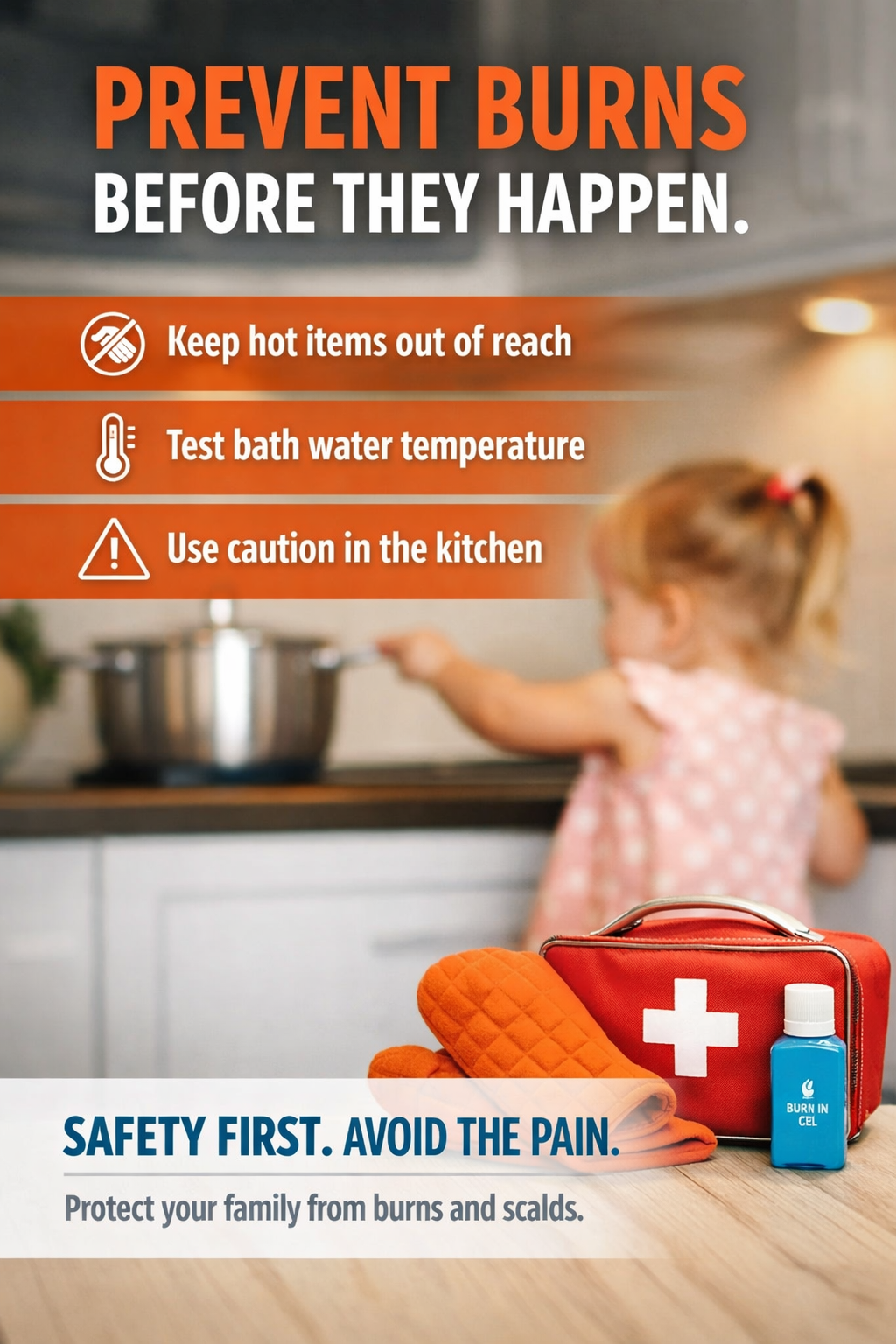
Simple precautions can make a big difference. Keep hot items out of reach, test water temperatures, and stay alert in the kitchen to protect yourself and your family from avoidable burns and scalds.
Injectable to the butt are buttock fillers (often hyaluronic acid or biostimulatory fillers) used to add volume to the butt.
Fat grafting/transfer on the other hand (commonly called a BBL) uses your own fat—harvested via liposuction, processed, and reinjected into the buttocks.
Fat grafting is generally more natural and longer-lasting, while fillers are less invasive but temporary.
Yes, fat cells removed during liposuction do not return. However, remaining fat cells can still expand with weight gain, so maintaining a stable lifestyle is important to preserve results.
In my practice, I advise patients not to sit on the butt for two weeks, after this period - I tell them not to sit for long period of time, few minutes after each hour. BBL pillows help to also take pressure off the fat.
Different surgeons have different practices- consult your surgeon